



3U vs 4U Server Rack Battery: The Powerful Truth Every Installer Should Know
Understanding Rack Units: Why 3U and 4U Matter
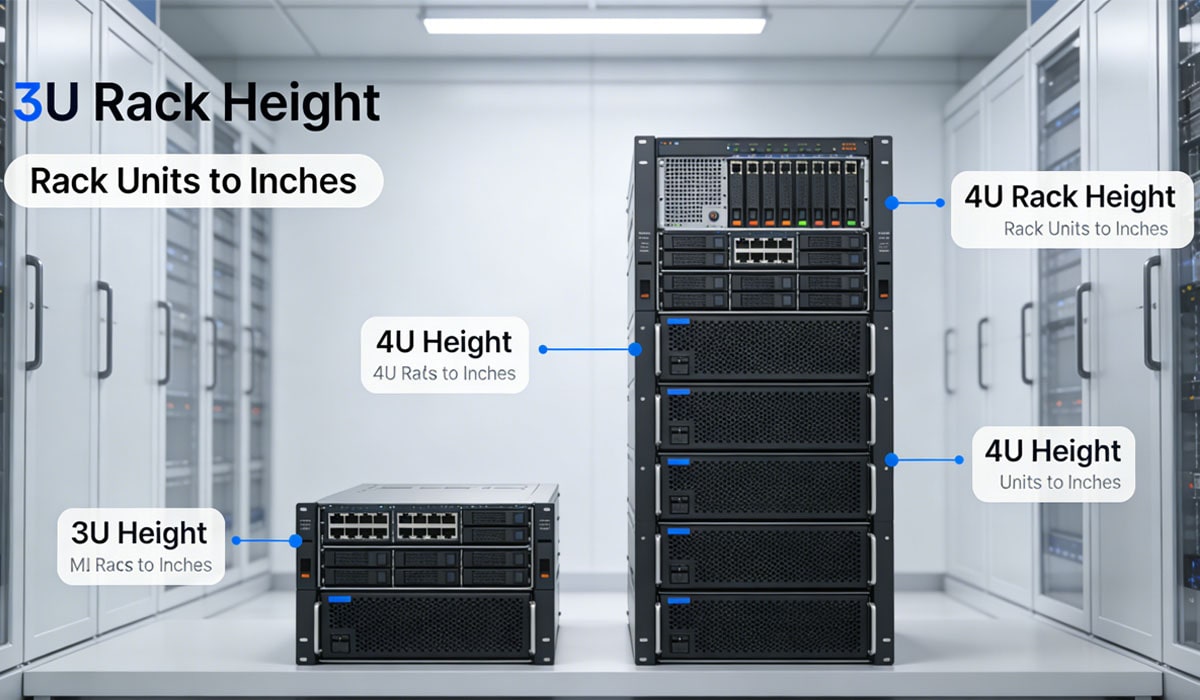
Before comparing a 3U vs 4U server rack battery, it’s important to understand what “U” actually means. A rack unit (U) is a standardized measurement used in server racks. 1U equals 1.75 inches (44.45 mm) in height. Using simple rack units to inches conversion, a 3U height device measures 5.25 inches, while a 4U rack height reaches 7 inches.
This difference may sound small, but in real-world rack planning—especially for energy storage or rackmount battery systems—it directly affects capacity, cooling, and installation flexibility.
What Is a 3U Rack Battery Used For?
A 3U rack battery is designed for compact environments where rack space is limited. These systems are commonly installed in telecom cabinets, small data centers, or edge energy storage setups.
Because of the reduced height, a 3U battery typically has:
Lower single-unit energy capacity
Lighter weight for easier handling
Faster installation in shallow racks
However, installers should note that 3U systems may require more parallel units to reach the same total capacity as a 4U rackmount solution.
Why 4U Rack Batteries Dominate Energy Storage Racks
A 4U rack battery offers more internal volume, which directly translates into higher energy density and better thermal management. This is why most commercial and industrial energy storage systems prefer a 4U rackmount design.
In a standard 4U rack server environment, batteries benefit from:
Larger cell configuration space
Improved airflow and heat dissipation
Higher single-unit kWh capacity
For projects using standard 4U rack rails, installation is more stable, especially for heavier lithium battery modules.
4U Rack Height Explained for Real Installations
The exact 4U rack height is 7 inches, but practical installation requires additional clearance for ventilation and cable routing. This becomes especially important in battery cabinets or hybrid PV-storage systems.
Whether mounted in a 4U wall mount rack or floor-standing cabinet, the added height allows:
Safer cable bending radius
Better BMS and fuse layout
Reduced thermal stress over long cycles
These factors significantly impact battery lifespan and system reliability.
Comparing Power Density: 3U vs 4U Server Rack Battery
From a power and capacity perspective, the difference is clear. A single 4U rack battery can often replace 1.3–1.5 units of a 3U battery, depending on cell chemistry and design.
In practical terms:
Fewer 4U units = cleaner rack layout
Lower parallel connection complexity
Easier system maintenance
This is why large-scale ESS projects and data center backup systems rarely rely on 3U-only configurations.
Compatibility with Standard Racks and Accessories
Both 3U and 4U batteries are designed for standard 19-inch racks, but 4U systems are more universally compatible with enterprise-grade accessories.
For example:
4U studio rack and industrial racks share similar load ratings
Standard rack 4U shelves and rails are easier to source globally
Cable management accessories are optimized for 4U spacing
This ecosystem maturity makes 4U systems safer for long-term deployment.
Which One Should You Choose? Final Expert Advice
If you’re deciding between a 3U vs 4U server rack battery, the right answer depends on your application:
Choose 3U if you need:
Ultra-compact installation
Lightweight modules
Flexible scaling in small racks
Choose 4U if you prioritize:
Higher energy per unit
Better thermal performance
Easier installation with standard 4U rack rails
From an installer and system integrator’s perspective, 4U rackmount batteries offer a more future-proof solution for most energy storage and backup power projects.





How Can We Help?
Contact