




Unveiling the Remarkable Evolution of Electric Power Distribution Systems: From Humble Beginnings to Global Innovation
Introduction: What Is Electric Power Distribution, and Why Does Its History Matter?
Before diving into the history of power distribution systems, let’s clarify a fundamental question: what is electric power distribution? Simply put, it’s the process of delivering electrical energy from power generation sources (like power stations) to end-users, including homes, businesses, and industries. The evolution of electric power distribution systems is a story of human ingenuity that transformed society, enabling the modern technological age. Every breakthrough in electrical energy distribution not only changed how we live but also laid the groundwork for future innovations in energy distribution systems.
The Birth of Power Lines: A Pivotal Moment in Electrical Power Distribution
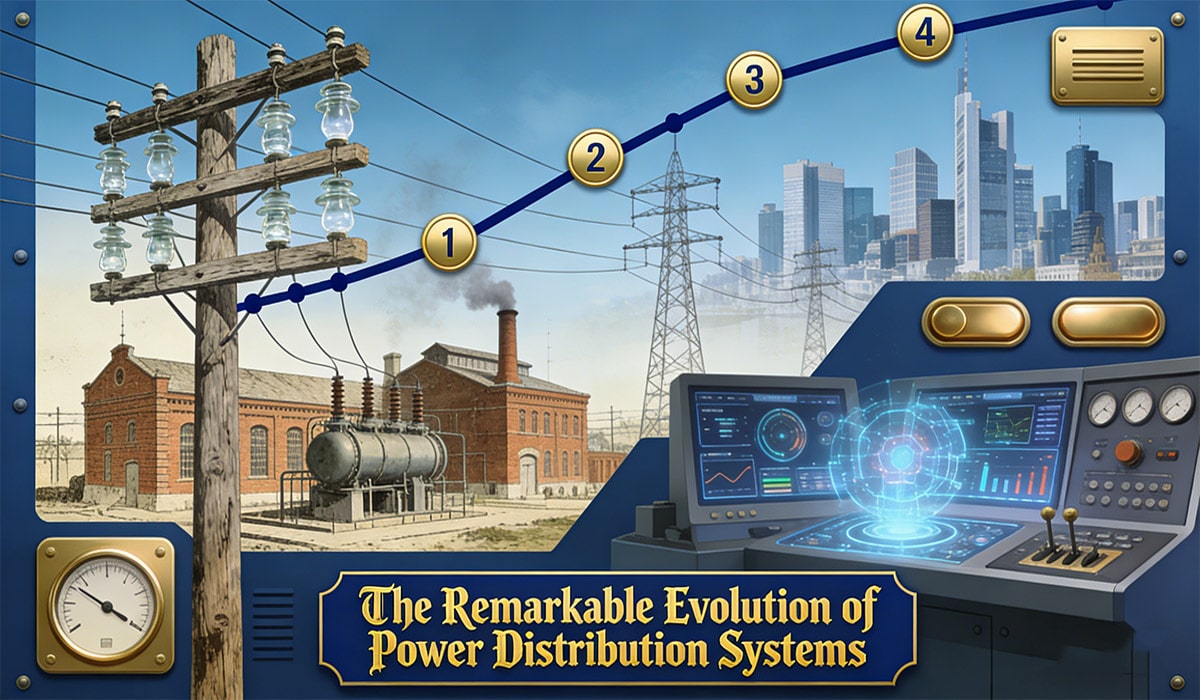
One of the most critical questions in this history is: when were power lines invented? The late 19th century marked the dawn of practical electric power distribution. In the 1880s, visionaries like Thomas Edison and George Westinghouse pioneered early systems. Edison’s direct current (DC) system, launched in New York with a small power station, used the first power lines to supply electricity to a limited area. Shortly after, Westinghouse’s alternating current (AC) system revolutionized electrical power generation and distribution, as AC could travel longer distances more efficiently. This era also saw the first industrial electrical distribution system emerge, powering factories and driving industrial growth.
The Rise of Central Power Dist: Shaping Modern Electric Power Distribution Systems
As demand for electricity grew, central power dist (central power distribution) became the standard. Instead of small, localized power stations, large central power plants were built, connected to wide-ranging networks of power lines. General Electric Company, founded in 1892 (answering the question of how old is General Electric Company), played a pivotal role in advancing these systems, developing key components for both generation and distribution. By the early 20th century, electric power distribution systems had expanded across cities and towns, making electricity accessible to the masses. This period also refined how is power distributed, with improved transformers and grid designs enhancing reliability.
From Early Days to Today: The Ongoing Evolution of Energy Distribution Systems
The history of power distribution is far from static. Over the decades, energy distribution systems have evolved to meet growing demand and new challenges. Modern industrial electrical distribution systems are more efficient, automated, and integrated with renewable energy sources. The core of electrical power generation and distribution remains the same—delivering reliable electricity—but the technology has advanced exponentially. Today’s systems build on the foundational innovations of the 19th century, proving that the history of power is a continuous journey of improvement. Understanding this history helps us appreciate the complex networks that power our world and guide future advancements in electric power distribution.


How Can We Help?
Contact