



Distributed or Centralized Energy Storage? A Powerful Guide to Choosing the Right System for Your Needs
Understanding the Core Difference Between Distributed and Centralized Energy
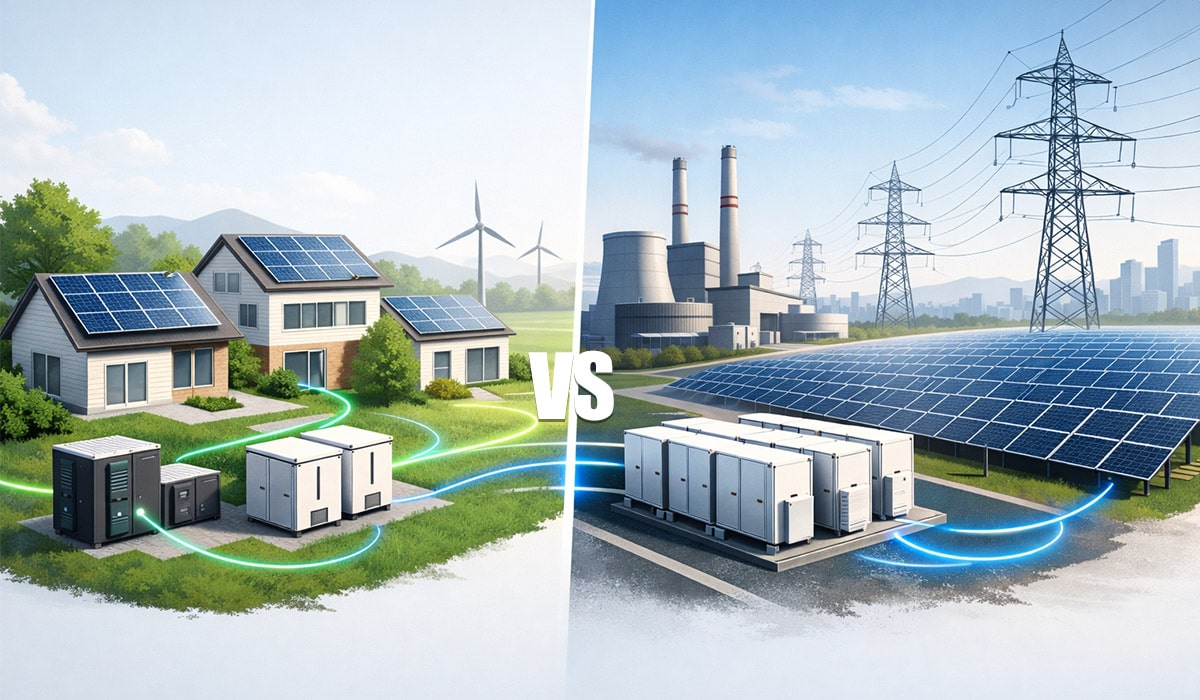
When people talk about energy storage systems, the debate often comes down to distributed vs centralized energy. At its core, the difference lies in where energy is generated, stored, and managed. Centralized energy systems rely on large-scale facilities that supply power to many users, while distributed solar energy systems place generation and storage closer to where electricity is actually consumed. Understanding this distinction is the first step to making a smart investment decision.
What Is Centralized Energy Storage and How Does It Work?
A centralized energy storage system typically consists of a large battery installation connected to a power plant or utility-scale solar farm. Energy is produced in one location, stored in high-capacity batteries, and then transmitted through the grid. This model has long been favored for its ability to support large populations and stabilize national or regional power networks. However, it also depends heavily on long-distance transmission and grid reliability.
The Rise of Distributed Solar Energy Systems
Distributed solar energy takes a different approach. Instead of relying on a single large source, energy is generated and stored at or near the point of use—homes, factories, commercial buildings, or microgrids. Batteries work alongside rooftop solar panels or local solar arrays, allowing users to manage their own solar energy distribution. This model has gained popularity as businesses and homeowners seek more control over energy costs and reliability.
Comparing Efficiency and Energy Loss
One of the biggest practical differences between these systems is energy loss. Centralized energy systems lose power during long-distance transmission. In contrast, distributed solar energy minimizes this issue because electricity is stored and consumed locally. For users in regions with unstable grids or frequent outages, reducing transmission dependency can significantly improve real-world efficiency and system reliability.
Cost Structure and Investment Considerations
From a cost perspective, centralized energy systems benefit from economies of scale but require massive upfront investment and complex infrastructure. Distributed energy storage systems, on the other hand, are modular. Users can start small and expand over time. This makes distributed solar energy especially attractive for small businesses, factories, and residential users who want flexible, scalable solutions without committing to a single large project.
Reliability, Resilience, and Power Security
Centralized energy systems are effective for balancing national demand but can become single points of failure. A grid fault or natural disaster may impact thousands of users at once. Distributed solar energy systems improve resilience by decentralizing risk. Even if the grid fails, local energy storage can continue supplying power, making this approach ideal for critical facilities and off-grid or semi-grid applications.
Which System Fits Your Real-World Needs Best?
Choosing between distributed and centralized energy storage should be driven by your actual use case. Large utilities and governments may prioritize centralized energy for grid-scale stability. Meanwhile, businesses aiming to reduce electricity bills, protect against outages, or optimize solar energy distribution often benefit more from distributed systems. The right choice depends on location, load demand, budget, and long-term energy strategy.
Future Trends: Hybrid Models and Smart Energy Management
The future is not strictly distributed or centralized—it’s increasingly hybrid. Smart energy management platforms now integrate distributed solar energy with centralized grids, allowing systems to communicate and balance loads intelligently. As battery technology and energy management software evolve, users will gain more freedom to design systems that combine the strengths of both approaches.

How Can We Help?
Contact